
Baby Reindeer Explained
Answer 1
Baby Reindeer in more detail
_Baby Reindeer_ is a British psychological drama and black comedy created by Scottish comedian Richard Gadd. Netflix released all seven episodes on April 11, 2024. It is a limited series, so it tells a complete story rather than ending on a conventional setup for Season 2. Most episodes run around 30 to 45 minutes.
The series is gripping, exceptionally acted, and deliberately uncomfortable. It is not really a crime thriller about catching a stalker. It is primarily about trauma, shame, obsession, loneliness, sexuality, and the complicated psychology of victimhood.
The story, without major spoilers
Donny Dunn, played by Gadd, is an unsuccessful comedian working in a London pub. One day, he gives a free cup of tea to Martha, a distressed customer who claims to be a successful lawyer. She interprets his kindness as romantic interest and begins visiting him constantly.
Her attachment rapidly develops into stalking. According to Netflix’s background article, Martha sends Donny hundreds of hours of voice messages and more than 40,000 emails. But Donny does not react in the clean, rational way audiences might expect. He sometimes encourages her, seeks her attention, feels sympathy for her, and struggles to establish boundaries.
That contradictory behaviour is central to the series. The story gradually reveals why Donny responds this way and how an earlier traumatic experience damaged his self-worth.

Martha is not portrayed as a simple monster
Jessica Gunning plays Martha with an unusual mixture of warmth, humour, instability, intimidation, and genuine sadness. You can see why Donny initially feels compassion for her, even after her behaviour becomes frightening.
Gadd has said that he deliberately avoided the conventional television image of a mysterious, glamorous stalker. He wanted Martha to remain recognizably human rather than become a one-dimensional villain. That ambiguity makes the series substantially more disturbing: both characters can be sympathetic and destructive at the same time.
Gunning’s performance was widely considered one of the show’s greatest strengths. She won both an Emmy and a Golden Globe for the role.

Principal cast
- Richard Gadd as Donny Dunn: A fictionalized version of Gadd himself, struggling with comedy, identity, relationships, and unresolved trauma.
- Jessica Gunning as Martha Scott: The woman whose attachment to Donny turns into an obsessive stalking campaign.
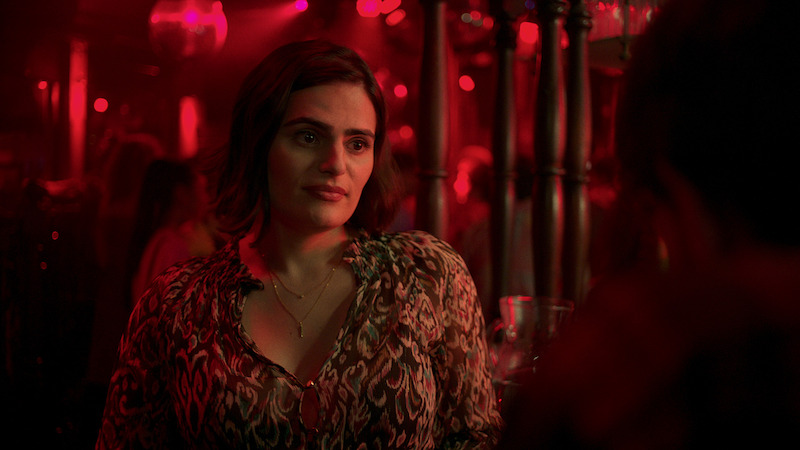
- Nava Mau as Teri: A transgender therapist whom Donny meets through a dating app. She is confident and emotionally perceptive, but Donny’s shame and dishonesty damage their relationship.
- Tom Goodman-Hill as Darrien O’Connor: A successful television writer who offers to help Donny’s career. His relationship with Donny becomes a major part of the story.
- Nina Sosanya and Michael Wildman: Donny’s mother and father.
- Shalom Brune-Franklin: Keeley, Donny’s former girlfriend.
Teri is particularly important because she represents the possibility of a healthier relationship. However, the show does not treat her only as a device for Donny’s development. Nava Mau gives her considerable intelligence, dignity, and emotional presence.
How much of it is true?
The series grew from Gadd’s autobiographical one-man stage shows. _Baby Reindeer_, first performed in 2019, concerned his experience of being stalked. An earlier show, _Monkey See Monkey Do_, explored his experience of sexual assault and its psychological consequences.
Gadd plays a fictionalized version of himself, but the television series changes names, dialogue, chronology, locations, and other details. It is therefore best understood as autofiction based on real experiences, not a documentary or a literal reconstruction of every event.
Netflix originally introduced the program with the statement “This is a true story.” That strong wording became controversial when online viewers attempted to identify the real people behind its characters.
A woman named Fiona Harvey publicly claimed that Martha was based on her. She disputed major aspects of the portrayal and filed a $170 million defamation lawsuit against Netflix in June 2024. Gadd has urged viewers not to speculate about the identities of the real people involved. The controversy does not prove that either the show or Harvey’s account is entirely correct. It demonstrates why dramatized personal stories can become legally and ethically complicated when the audience can identify their subjects.
Episode 4 and content warning
The fourth episode explains Donny’s earlier trauma and is the emotional centre of the series. It contains an extended depiction of grooming, drug use, sexual assault, and psychological manipulation. It is difficult to watch and considerably darker than the opening episodes.
The show also includes stalking, harassment, violence, homophobia, transphobia, substance abuse, depression, and suicidal thoughts. It is not casual background entertainment.
Why critics liked it
Critics praised the show for refusing to present Donny as a flawless victim. He makes harmful and confusing decisions, sometimes recognizes them, and sometimes repeats them anyway. The series asks why trauma can cause someone to return to attention or situations that hurt them.
Rotten Tomatoes described it as a “punishing watch” that rewards viewers through its emotional complexity and performances. Contemporary review data recorded approximately 99% positive reviews from critics, while Metacritic reported 88 out of 100, categorized as universal acclaim.
The series won six Primetime Emmy Awards, including:
- Outstanding Limited or Anthology Series
- Lead Actor for Richard Gadd
- Supporting Actress for Jessica Gunning
- Writing for Richard Gadd
- Casting
- Picture editing
The wins and nominations are listed by the Television Academy. It also won two Golden Globes: Best Limited Series and Supporting Actress for Gunning.
Is it worth watching?
Yes, if you like psychologically complex character dramas. It is intense, sometimes funny, exceptionally performed, and only about four hours long. It shares some DNA with shows such as I May Destroy You, Fleabag, and The End of the F*ing World, although its treatment of trauma is much heavier.
Avoid it if you want a conventional stalker thriller, sympathetic heroes who behave rationally, or something relaxing. The series intentionally makes the viewer feel uncertain about nearly everyone.